-
-
-
-
-
-
-
-
-
-
My Showroom & Support









































Lumens, Color Temperature, and CRI: The Three Numbers That Decide How a Room Feels
How much light you get, what color that light is, and how honestly it shows the things it lands on. Get one right and the others wrong, and a room can be bright and still feel off.
Every light bulb and fixture box has three numbers on it, and most people treat them as one idea. They are not. They control three different things, and a room can be perfectly bright and still feel wrong because two of the three were never considered. Once you understand what each one does, choosing lighting gets a lot less mysterious.
Lumens: How Much Light You Get
Lumens measure how much light a bulb or fixture puts out. Watts measure how much energy it uses. Back when everything was incandescent, watts were a decent stand-in for brightness. The moment LEDs arrived, that stopped being true. A 9-watt LED and a 60-watt incandescent give off about the same amount of light.
So buy on lumens, not watts. As a general guide:
- 450 lumens is about what an old 40-watt bulb gave you
- 800 lumens is about an old 60-watt
- 1,100 lumens is about an old 75-watt
- 1,600 lumens is about an old 100-watt
For planning a whole room, a good starting point is about 20 lumens per square foot for general living space, and 50 to 75 lumens per square foot for kitchen work surfaces and bathroom vanities. A 150-square-foot bedroom wants roughly 3,000 lumens in total. The same size kitchen wants a lot more.

That total is the sum of every fixture in the room, which is the whole point of layering your light. One fixture in the middle of the ceiling trying to light an entire kitchen by itself will be unpleasant no matter how pretty it is.
Color Temperature: What Color the Light Is
This is measured in Kelvin, and here is the part that trips people up: lower numbers are warmer.
2700K is warm and a little yellow, the color of a traditional incandescent bulb. Living rooms, bedrooms, dining rooms.
3000K is a warm white, just slightly crisper. It is the most useful number in a home and the safe default for kitchens and bathrooms.
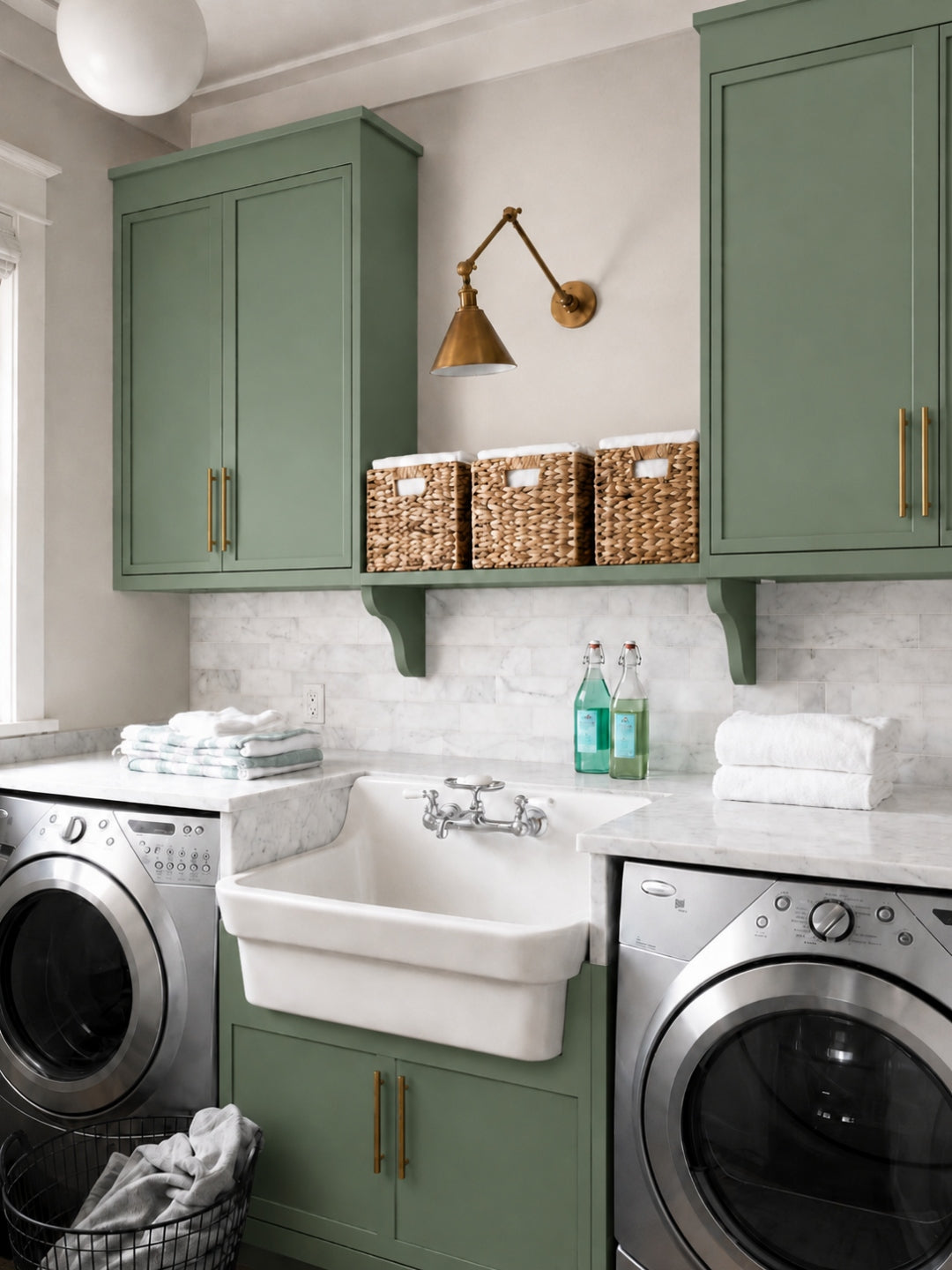
3500K to 4000K is neutral to cool white. Garages, laundry rooms, workshops, task areas. In a living room it feels like an office.
5000K and up is daylight. There are very few good uses for it inside a home. It makes warm wood look gray and makes everyone look a little ill.
The rule that matters more than any single number is this: keep it consistent within a sightline. A kitchen with 3000K ceiling lights, 2700K pendants, and 4000K under-cabinet strips looks off, and most people cannot say why. If you can see two fixtures at the same time, they should be the same color temperature.

This catches people most often when they replace one bulb from a different box. It is worth writing your chosen Kelvin on a piece of tape inside a cabinet door.
CRI: How Honestly the Light Shows Color
The Color Rendering Index measures how accurately a light shows colors compared with natural daylight, on a scale that goes up to 100.
This is the number that gets ignored, and it is the one that decides whether the finishes you spent months choosing actually look like themselves.
Below 80: colors look flat and slightly gray. Avoid it.
80 to 89: fine for general use. Most inexpensive LEDs live here.
90 and above: what you want anywhere color matters. Kitchens, bathrooms, closets, anywhere you are looking at food, fabric, paint, or your own face in a mirror.
Here is what that means in practice. A warm walnut floor under an 82 CRI light looks muddy. The same floor under a 95 CRI light looks like walnut. If you have invested in real materials, low-CRI lighting quietly undoes that investment every single evening.
Ask for CRI 90 or better in kitchens and bathrooms. It is the cheapest upgrade in the entire lighting plan.
How the Three Work Together

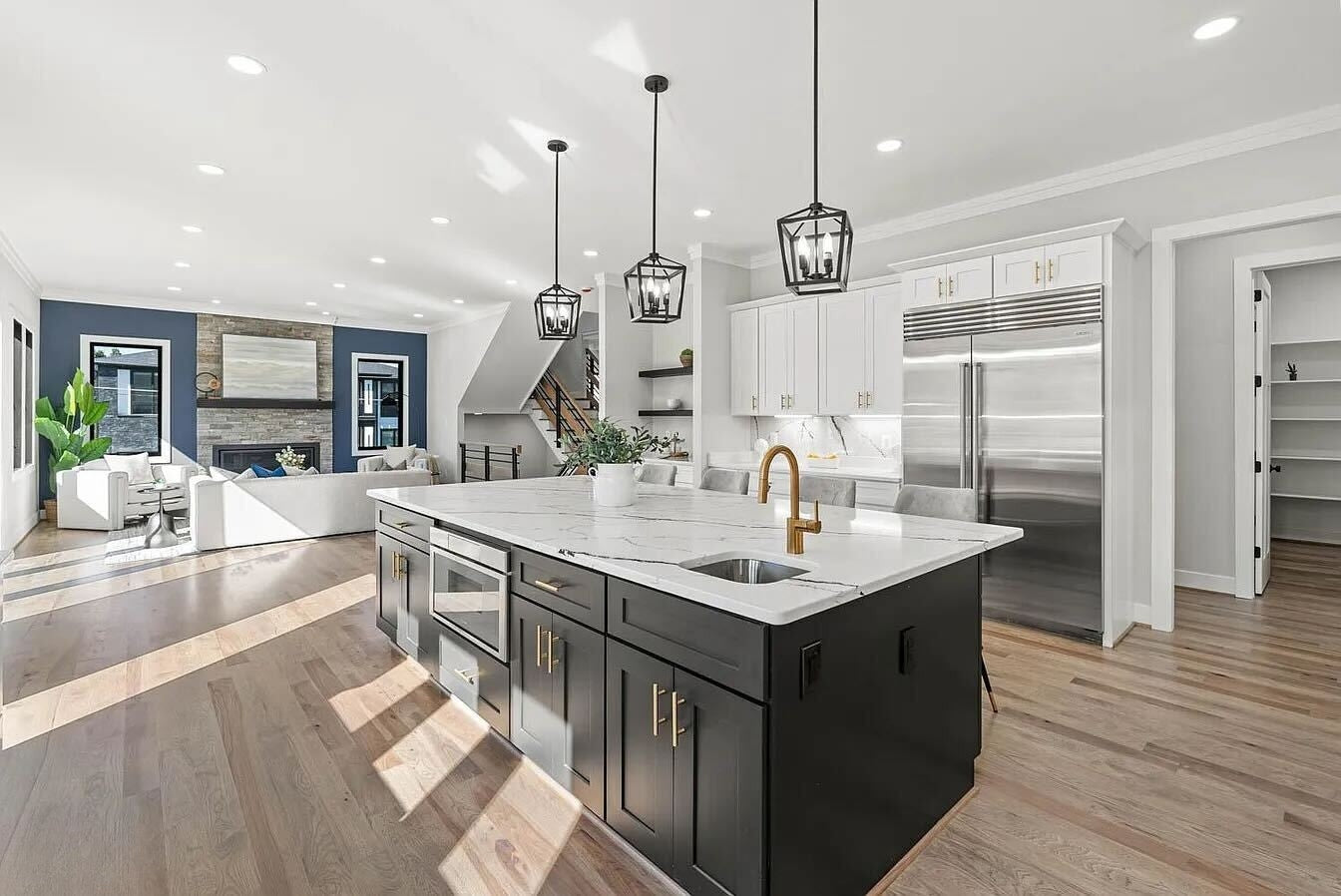
Here is what a good plan looks like in a kitchen. Everything at 3000K. CRI 90 or better. Layered so the total lands near 60 lumens per square foot: recessed or ceiling fixtures for general light, pendants over the island for task light and presence, and under-cabinet strips at the same Kelvin for the counter itself.
Get the lumens wrong and the room is dim or glaring. Let the Kelvin drift and it looks unresolved. Go cheap on CRI and every finish in the room is slightly off. You need all three.
One More Thing: Dimming
Dimming is what lets one lighting plan handle both cooking dinner and eating it. But with LEDs, dimming is not automatic. The fixture or bulb has to be marked dimmable, and it has to be paired with a dimmer made for LEDs. An old incandescent dimmer driving LED bulbs gives you flicker, buzzing, and a dead zone at the bottom of the slider.
Some better LEDs also warm up as they dim, sliding from 3000K down toward 2200K the way an incandescent used to. It is a lovely feature in a dining room or living room, and worth looking for.
Before You Order
Add up the lumens the room needs and divide them across layers. Pick one Kelvin and hold it across every fixture you can see at once. Ask for CRI 90 or better wherever color matters. Make sure dimmable fixtures are paired with LED-compatible dimmers. And for fixtures with a built-in LED, check whether the LED can be replaced. Some cannot.
Common Questions
What color temperature is best for a kitchen? 3000K for almost everyone. It is warm enough to feel like home and crisp enough to cook by. Whatever you choose, use it on every fixture in the room.
How many lumens do I need for a bathroom vanity? Plan on 50 to 75 lumens per square foot of the vanity area, at CRI 90 or better, so you can actually see what you are doing in the mirror.
Is a higher CRI worth paying for? In a kitchen, bathroom, or closet, yes. The difference in price is small and the difference in how your finishes look is not.
Browse pendants, ceiling lights, vanity lights, and under-cabinet lighting. Working out a whole-room plan? Ask a pro. A real person answers, usually within a business day, or start with free design help and we will layer the room with you. Our lighting guide covers how to light the whole room, not just how to pick a fixture.
More from the Learning Center
 Damp, Wet, Dimmable, or Integrated LED? How to Read a Light Fixture's Label Before You Buy
Read Article
 LVP, SPC, or Laminate? They Look Alike in the Store and Act Very Differently in Your House
Read Article
 Cabinet Hinges and Drawer Slides: Check the Cabinet Before You Fall for the Hardware
Read Article