-
-
-
-
-
-
-
-
-
-
My Showroom & Support










Cabinet Organizers and Interior Storage: Planning the Inside of the Box
The interiors are the part of a kitchen you touch every day and the part most often decided last. Plan them with the layout and you get a kitchen that works; add them afterward and you get whatever fits.
Nobody picks a kitchen because of its drawer inserts. Everybody lives in one because of them.
The inside of your cabinets is the part of the kitchen you touch a dozen times a day, and it is almost always the last thing anyone decides. It gets figured out after the boxes are ordered, or bought later from whatever happens to fit. That order of operations is backwards, and it is why so many freshly remodeled kitchens still have a corner cabinet nobody can reach into.
Here is how to plan the inside of the box before you order it.
Why the Timing Matters
Most organizers come in fixed widths sized to standard cabinet openings. Once your cabinet order is placed, those widths are locked in, and your organizer choices shrink to whatever the manufacturer makes for that opening.
Plan the interiors along with the layout and it works the other way around. You can choose a 15-inch base cabinet because that is what the pull-out you want requires, instead of finding out afterward that your 12-inch cabinet takes nothing useful. If you have not measured yet, start with how to measure your kitchen for new cabinets.

There is also a real difference between built-in organizers, which are specified with the cabinet and installed at the factory, and retrofit organizers added later. Built-in fits precisely and uses the whole interior. Retrofit always gives up a little space to mounting hardware and clearance, and how well it works depends on whoever installs it.
Retrofit is a perfectly good option for a kitchen you already have. For a new order, choosing it up front is better in every way.
The Decisions That Pay for Themselves
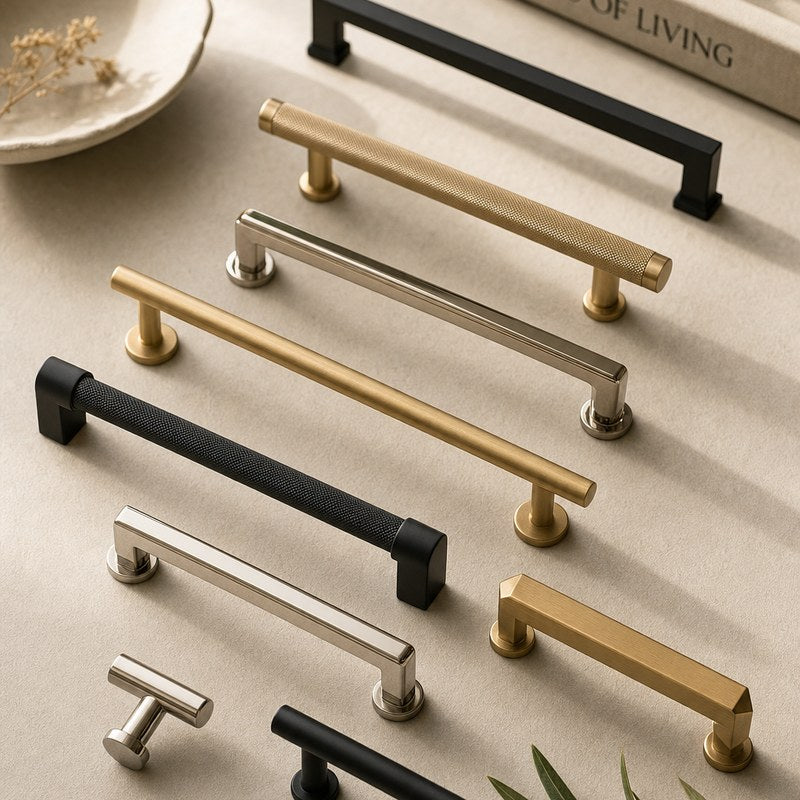
Drawers instead of doors on base cabinets. If you make one change to a kitchen, make this one. A base cabinet with a door means kneeling down and reaching into the dark. The same cabinet as three drawers brings everything up to you. It costs more per box, and it is worth every dollar. Most people who have lived with both will not go back. Drawers also change the hardware you will want, since pulls sized to the drawer front look and work better than knobs.

A corner solution, always. A blind corner cabinet with nothing inside it is dead storage. Your options are a lazy susan, a blind-corner pull-out that swings the back shelf forward, or a diagonal corner cabinet. Any of them beats the alternative, which is a cubic foot of space holding things you will never see again.
A pull-out trash and recycling unit. Two bins on a slide inside a base cabinet, sized to your bins. It gets the freestanding can off the floor, which opens up the room more than you would expect from such a small change.
A tray divider. Vertical dividers in a shallow cabinet above the fridge or next to the oven, for baking sheets, cutting boards, and platters that otherwise stack into an avalanche.

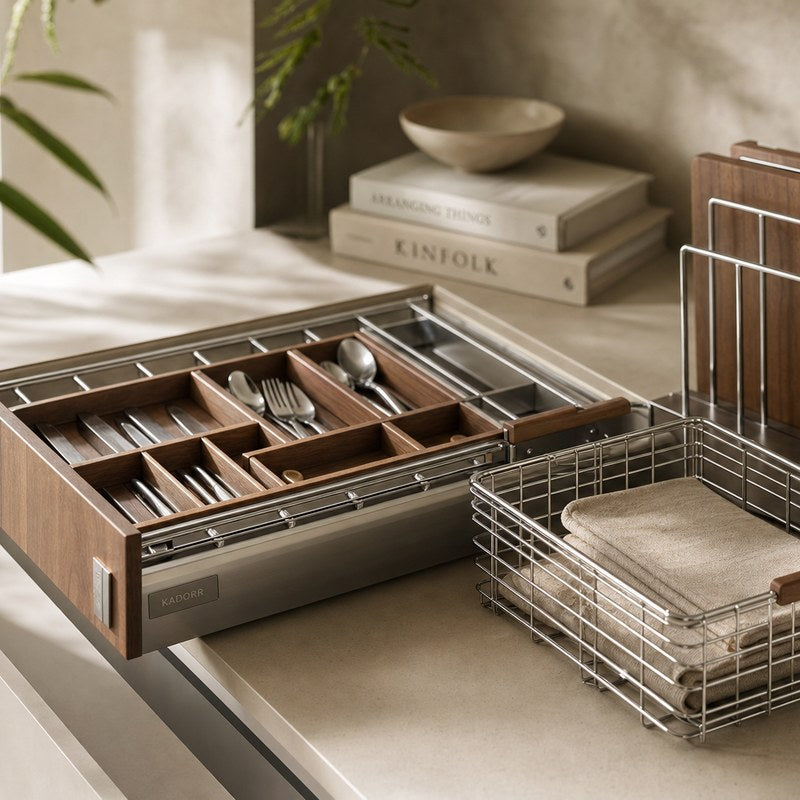
Drawer inserts sized to the drawer. Cutlery trays, knife blocks, spice inserts, peg systems for plates. Wood inserts cut to your actual drawer are noticeably nicer than plastic ones that sort of fit.
Room by Room
Kitchen. If you have to prioritize, go in this order: corner solution, drawers in the main base cabinets, trash pull-out, cutlery and utensil inserts, tray dividers, and then a pantry pull-out if you have a tall cabinet.
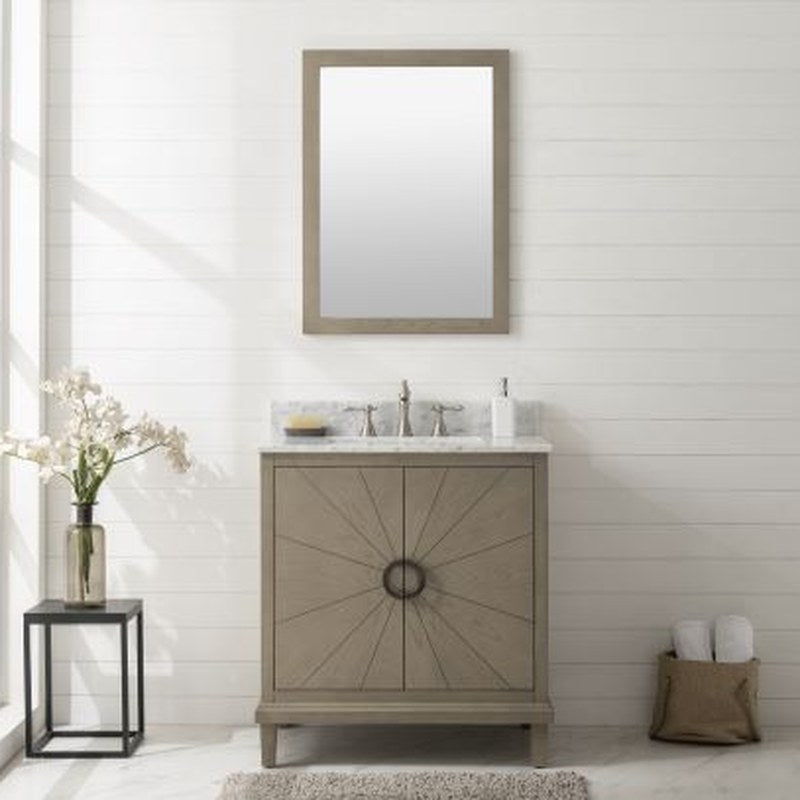
Bathroom. The plumbing is the constraint. A U-shaped pull-out clears the drain trap where a standard one will not fit. Add drawer inserts for small items, a tip-out tray at the sink front for sponges, and a pull-out hamper if the vanity is wide enough.
Laundry and mudroom. Pull-out hampers, a fold-away drying rack, and open cubbies with hooks. This is the room where organizers do more work per dollar than anywhere else in the house.
What to Check Before Ordering
Interior width, not nominal width. A 15-inch cabinet has a smaller opening inside. Organizers are sold against the interior dimension.
Face frame or frameless. A face frame narrows the opening, and many organizers need a frameless box or a face-frame version. Know which you have.
Depth and height clearance. Especially around plumbing in a vanity, or for a pull-out under a countertop overhang.
Weight rating on the slides. A pantry pull-out full of canned goods needs full-extension slides rated for the load. Slides that are under-rated sag, and then they bind.
Whether the manufacturer offers it built in. If they do, take it.
A Note on Where We Are
We publish a lot of education arguing that the interiors are the whole point of a cabinet, so I want to be straight with you about where we stand. We are still building out this category, and it is smaller today than it will be. Everything that is live right now is in Cabinet Organizers and Storage. If you need something you cannot find there, ask a pro. We can very often source it even if it is not on the site yet.
Rose Hill Cabinets arrive fully assembled with soft-close doors and drawers and dovetailed drawer boxes as standard, so the baseline quality inside the box is not something you have to specify or pay extra for. Browse the range in Rose Hill Cabinets, or start with the door styles.
Common Questions
Can I add organizers to cabinets I already have? Yes. Retrofit organizers are made for exactly that. Measure the interior width, depth, and height of the opening, note whether you have a face frame, and choose from there.
Are drawers really better than doors in a kitchen? For base cabinets, almost always. You see everything at once and nothing gets lost in the back. Wall cabinets still work best with doors.
What is the best fix for a blind corner cabinet? A blind-corner pull-out gives you the most usable storage. A lazy susan is simpler and less expensive. Either one is far better than an empty corner.
Planning a full room? My Showroom keeps the cabinet layout and everything that follows in one project, in the order a showroom would work through it, and free design help is there whenever you want a second set of eyes on the layout.
More from the Learning Center